Where there is (still) smoke, there might yet be more fire.
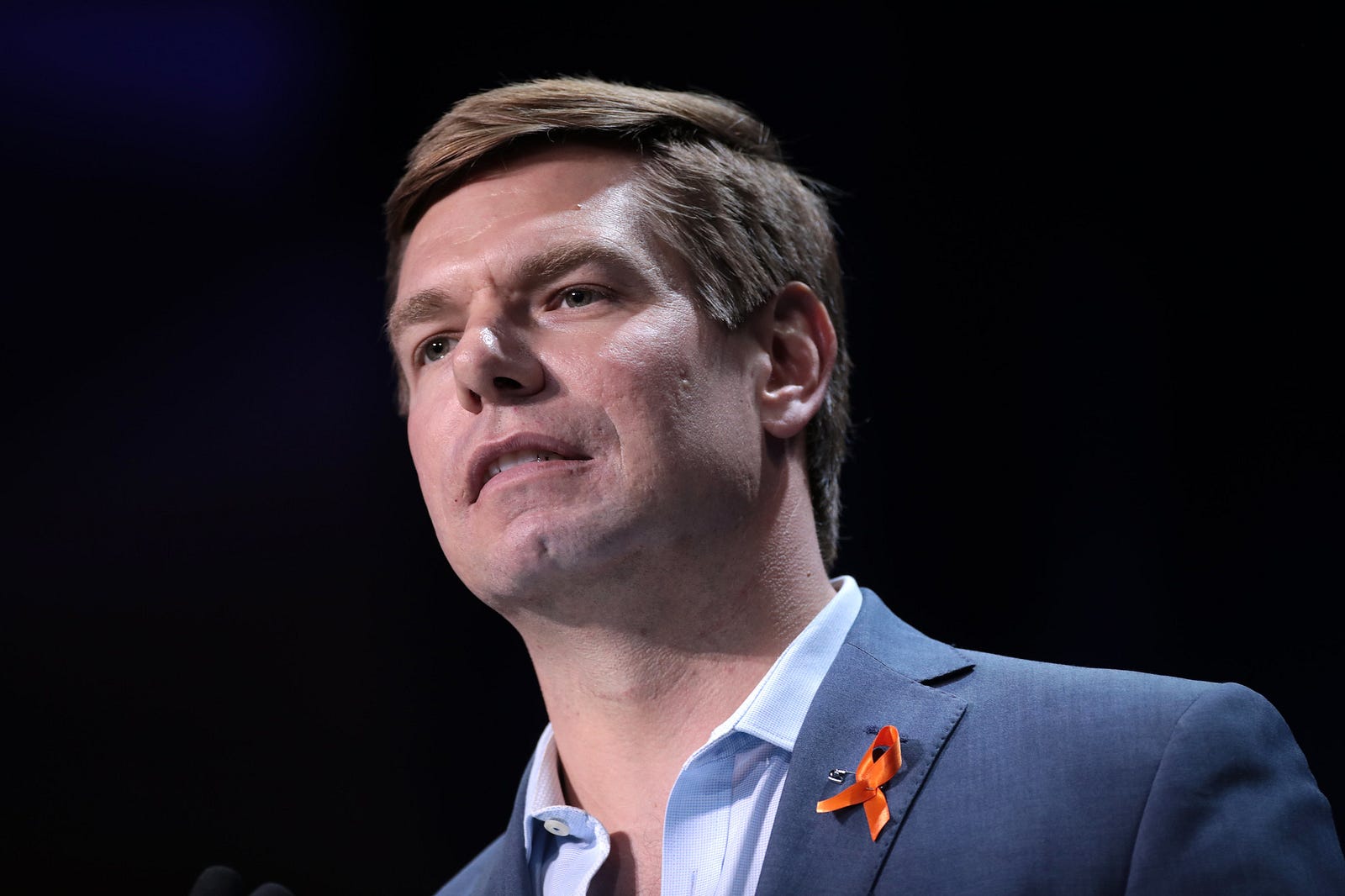
Soon-to-be-former Congressman Eric Swalwell’s powerful friends are abandoning him in droves. Judging by their public statements, no one is interested in running cover for the disgraced lawmaker any longer — who stands accused by five women as of Wednesday.
Stemming from the accusations, Swalwell is now facing criminal investigations in New York and California.
Unsavory rumors have dogged Swalwell for years. Now, it appears the rumors were much more than uninformed sniping and palace intrigues.
The Eric Swalwell scandal no longer looks like a single politician having a single terrible week, either. It looks like a dam breaking.
Swalwell has denied the allegations against him, of course. But five women have now accused him of sexual misconduct or assault, he has resigned from Congress, left the California governor’s race, and is facing criminal investigations.
The Manhattan DA is looking into one alleged assault, and the Los Angeles County Sheriff’s Department has opened an investigation into Lonna Drewes’s allegation that Swalwell drugged, choked, and raped her in 2018.
That is the legal story. And as the legal system does it’s work, there is sure to be more revealed in the months to come.
But the political story may be far bigger.
Because what is emerging now is not just a set of allegations. It is a picture of Washington and California political circles where people apparently heard things, whispered things, warned one another about things — and then, somehow, life went on.
Sen. Ruben Gallego, one of Swalwell’s closest friends in Congress, reportedly admitted he had heard rumors that Swalwell was “flirty” with women and now regrets not confronting him. Steve Hilton says he heard about this months ago from reporters and people connected to the California Democratic machine. The Washington Post reports that rumors about Swalwell’s behavior had followed him for years, even as his career rose inside a party that presents itself as a defender of women.
That does not prove every allegation. It does not prove that party leaders knew the worst of what is now being alleged. But it does make the “nobody knew anything” defense much harder to swallow.
There is a difference between gossip and evidence. There is also a difference between not knowing and not wanting to know.
The Los Angeles Times has now described a broader panic on Capitol Hill, with staffers, reporters, and opposition researchers racing to verify long-standing rumors about a darker culture among powerful people in Washington. Female staffers reportedly warned one another privately about lawmakers with reputations for inappropriate conduct. That is not a healthy workplace. That is not normal politics. That is a shadow HR system created by young women who know the official system may not protect them.
Then there is the House Ethics piece.
Swalwell resigned just as the House Ethics Committee had opened an inquiry into whether he “may have engaged in sexual misconduct, including towards an employee working under his supervision.” Once he left Congress, that probe was effectively dead, because the committee only has jurisdiction over current members.
Again, resignation is not proof of guilt. But it is fair to ask the obvious question: if there were no other skeletons waiting to leap out of the closet, why run from the one institution that might have cleared Swalwell’s name?
Maybe Swalwell believed the process was unfair. Maybe he thought resignation was best for his family and constituents. Maybe. But politically, it looks like a man fleeing the building while the fire alarm is still going off.
And there is still smoke everywhere.
Cheyenne Hunt, who helped connect some accusers with reporters, says more than 30 women have contacted her with stories involving Swalwell, ranging from inappropriate messages to more serious claims. Those stories are not all verified public allegations. They may not all become formal complaints. But the number itself is startling.
Even the rumored video floating around this scandal raises strange questions. We may not know exactly what it shows or whether some of the seedier claims attached to it are true. But someone filmed Swalwell in a compromising situation, and that alone is weird. Who took it? Why? Was it meant as leverage? Opposition research? Insurance? A joke? A warning? In ordinary life, people do not casually collect compromising footage of congressmen for no reason.
That is what makes this moment feel bigger than Swalwell.
This scandal now sits at the intersection of sex, power, ambition, media silence, party protection, and political timing. Nancy Pelosi was asked on C-SPAN whether Democrats had turned a blind eye. She said absolutely not. Of course she did. But the fact that the question was asked at all tells us the story has escaped containment.
For years, the public has been told that institutions learned the lessons of #MeToo. Maybe some did. But Washington has always had a way of absorbing scandal, renaming it “rumor,” and moving on until it becomes useful or impossible to ignore.
Swalwell may be guilty of nothing criminal. That is for investigators, prosecutors, and perhaps courts to decide. But the larger question is already before us: how many people heard enough to be concerned, but not enough to act? How many women warned each other because no one else would? How many careers were protected because the politician in question was useful?
Where there is smoke, there is not always fire.
But in this case, the smoke is still rising.
(Contributing writer, Brooke Bell)